Trắc nghiệm Toán 11 Bài 4: Trắc nghiệm vi phân của hàm số có đáp án (Mới nhất) Chương 5: Đạo hàm
Chủ đề liên quan: Lớp 11 Toán học
Bộ sưu tập: TOÁN 11
Bạn chưa làm đề thi này!
Bắt đầu làm bài
Câu 1:
Cho hàm số y = f ( x ) = ( x − 1 ) 2 y = f\left( x \right) = {\left( {x - 1} \right)^2} y = f ( x ) = ( x − 1 ) 2 . Biểu thức nào sau đây chỉ vi phân của hàm số f ( x ) f\left( x \right) f ( x ) ?
A. d y = 2 ( x − 1 ) d x {\rm{d}}y = 2\left( {x - 1} \right){\rm{d}}x d y = 2 ( x − 1 ) d x . B. d y = ( x − 1 ) 2 d x {\rm{d}}y = {\left( {x - 1} \right)^2}{\rm{d}}x d y = ( x − 1 ) 2 d x . C. d y = 2 ( x − 1 ) {\rm{d}}y = 2\left( {x - 1} \right) d y = 2 ( x − 1 ) . D. d y = 2 ( x − 1 ) d x {\rm{d}}y = 2\left( {x - 1} \right){\rm{d}}x d y = 2 ( x − 1 ) d x .
Câu 2:
Tìm vi phân của các hàm số y = x 3 + 2 x 2 y = {x^3} + 2{x^2} y = x 3 + 2 x 2
A. d y = ( 3 x 2 − 4 x ) d x dy = (3{x^2} - 4x)dx d y = ( 3 x 2 − 4 x ) d x B. d y = ( 3 x 2 + x ) d x dy = (3{x^2} + x)dx d y = ( 3 x 2 + x ) d x C. d y = ( 3 x 2 + 2 x ) d x dy = (3{x^2} + 2x)dx d y = ( 3 x 2 + 2 x ) d x D. d y = ( 3 x 2 + 4 x ) d x dy = (3{x^2} + 4x)dx d y = ( 3 x 2 + 4 x ) d x
Câu 3:
Tìm vi phân của các hàm số y = 3 x + 2 y = \sqrt {3x + 2} y = 3 x + 2
A. d y = 3 3 x + 2 d x dy = \frac{3}{{\sqrt {3x + 2} }}dx d y = 3 x + 2 3 d x B. d y = 1 2 3 x + 2 d x dy = \frac{1}{{2\sqrt {3x + 2} }}dx d y = 2 3 x + 2 1 d x C. d y = 1 3 x + 2 d x dy = \frac{1}{{\sqrt {3x + 2} }}dx d y = 3 x + 2 1 d x D. d y = 3 2 3 x + 2 d x dy = \frac{3}{{2\sqrt {3x + 2} }}dx d y = 2 3 x + 2 3 d x
Câu 4:
Cho hàm số y = x 3 − 9 x 2 + 12 x − 5 y = {x^3} - 9{x^2} + 12x - 5 y = x 3 − 9 x 2 + 12 x − 5 . Vi phân của hàm số là:
A. d y = ( 3 x 2 − 18 x + 12 ) d x {\rm{d}}y = \left( {3{x^2} - 18x + 12} \right){\rm{d}}x d y = ( 3 x 2 − 18 x + 12 ) d x . B. d y = ( − 3 x 2 − 18 x + 12 ) d x {\rm{d}}y = \left( { - 3{x^2} - 18x + 12} \right){\rm{d}}x d y = ( − 3 x 2 − 18 x + 12 ) d x . C. d y = − ( 3 x 2 − 18 x + 12 ) d x {\rm{d}}y = - \left( {3{x^2} - 18x + 12} \right){\rm{d}}x d y = − ( 3 x 2 − 18 x + 12 ) d x . D. d y = ( − 3 x 2 + 18 x − 12 ) d x {\rm{d}}y = \left( { - 3{x^2} + 18x - 12} \right){\rm{d}}x d y = ( − 3 x 2 + 18 x − 12 ) d x .
Câu 5:
Tìm vi phân của các hàm số y = ( 3 x + 1 ) 10 y = {(3x + 1)^{10}} y = ( 3 x + 1 ) 10
A. d y = 10 ( 3 x + 1 ) 9 d x dy = 10{(3x + 1)^9}dx d y = 10 ( 3 x + 1 ) 9 d x B. d y = 30 ( 3 x + 1 ) 10 d x dy = 30{(3x + 1)^{10}}dx d y = 30 ( 3 x + 1 ) 10 d x C. d y = 9 ( 3 x + 1 ) 10 d x dy = 9{(3x + 1)^{10}}dx d y = 9 ( 3 x + 1 ) 10 d x D. d y = 30 ( 3 x + 1 ) 9 d x dy = 30{(3x + 1)^9}dx d y = 30 ( 3 x + 1 ) 9 d x
Câu 6:
Tìm vi phân của các hàm số y = sin 2 x + sin 3 x y = \sin 2x + {\sin ^3}x y = sin 2 x + sin 3 x
A. d y = ( cos 2 x + 3 sin 2 x cos x ) d x dy = \left( {\cos 2x + 3{{\sin }^2}x\cos x} \right)dx d y = ( cos 2 x + 3 sin 2 x cos x ) d x B. d y = ( 2 cos 2 x + 3 sin 2 x cos x ) d x dy = \left( {2\cos 2x + 3{{\sin }^2}x\cos x} \right)dx d y = ( 2 cos 2 x + 3 sin 2 x cos x ) d x C. d y = ( 2 cos 2 x + sin 2 x cos x ) d x dy = \left( {2\cos 2x + {{\sin }^2}x\cos x} \right)dx d y = ( 2 cos 2 x + sin 2 x cos x ) d x D. d y = ( cos 2 x + sin 2 x cos x ) d x dy = \left( {\cos 2x + {{\sin }^2}x\cos x} \right)dx d y = ( cos 2 x + sin 2 x cos x ) d x
Câu 7:
Tìm vi phân của các hàm số y = tan 2 x y = \tan 2x y = tan 2 x
A. d y = ( 1 + tan 2 2 x ) d x dy = (1 + {\tan ^2}2x)dx d y = ( 1 + tan 2 2 x ) d x B. d y = ( 1 − tan 2 2 x ) d x dy = (1 - {\tan ^2}2x)dx d y = ( 1 − tan 2 2 x ) d x C. d y = 2 ( 1 − tan 2 2 x ) d x dy = 2(1 - {\tan ^2}2x)dx d y = 2 ( 1 − tan 2 2 x ) d x D. d y = 2 ( 1 + tan 2 2 x ) d x dy = 2(1 + {\tan ^2}2x)dx d y = 2 ( 1 + tan 2 2 x ) d x
Câu 8:
Tìm vi phân của các hàm số y = x + 1 3 y = \sqrt[3]{{x + 1}} y = 3 x + 1
A. d y = 1 ( x + 1 ) 2 3 d x dy = \frac{1}{{\sqrt[3]{{{{(x + 1)}^2}}}}}dx d y = 3 ( x + 1 ) 2 1 d x B. d y = 3 ( x + 1 ) 2 3 d x dy = \frac{3}{{\sqrt[3]{{{{(x + 1)}^2}}}}}dx d y = 3 ( x + 1 ) 2 3 d x C. d y = 2 ( x + 1 ) 2 3 d x dy = \frac{2}{{\sqrt[3]{{{{(x + 1)}^2}}}}}dx d y = 3 ( x + 1 ) 2 2 d x D. d y = 1 3 ( x + 1 ) 2 3 d x dy = \frac{1}{{3\sqrt[3]{{{{(x + 1)}^2}}}}}dx d y = 3 3 ( x + 1 ) 2 1 d x
Câu 9:
Xét hàm số y = f ( x ) = 1 + cos 2 2 x y = f\left( x \right) = \sqrt {1 + {{\cos }^2}2x} y = f ( x ) = 1 + cos 2 2 x . Chọn câu đúng:
A. d f ( x ) = − sin 4 x 2 1 + cos 2 2 x d x {\rm{d}}f(x) = \frac{{ - \sin 4x}}{{2\sqrt {1 + {{\cos }^2}2x} }}{\rm{d}}x d f ( x ) = 2 1 + c o s 2 2 x − s i n 4 x d x . B. d f ( x ) = − sin 4 x 1 + cos 2 2 x d x {\rm{d}}f(x) = \frac{{ - \sin 4x}}{{\sqrt {1 + {{\cos }^2}2x} }}{\rm{d}}x d f ( x ) = 1 + c o s 2 2 x − s i n 4 x d x . C. d f ( x ) = cos 2 x 1 + cos 2 2 x d x {\rm{d}}f(x) = \frac{{\cos 2x}}{{\sqrt {1 + {{\cos }^2}2x} }}{\rm{d}}x d f ( x ) = 1 + c o s 2 2 x c o s 2 x d x . D. d f ( x ) = − sin 2 x 2 1 + cos 2 2 x d x {\rm{d}}f(x) = \frac{{ - \sin 2x}}{{2\sqrt {1 + {{\cos }^2}2x} }}{\rm{d}}x d f ( x ) = 2 1 + c o s 2 2 x − s i n 2 x d x .
Câu 10:
Cho hàm số y = x 3 − 5 x + 6 y = {x^3} - 5x + 6 y = x 3 − 5 x + 6 . Vi phân của hàm số là:
A. d y = ( 3 x 2 − 5 ) d x {\rm{d}}y = \left( {3{x^2} - 5} \right){\rm{d}}x d y = ( 3 x 2 − 5 ) d x . B. d y = − ( 3 x 2 − 5 ) d x {\rm{d}}y = - \left( {3{x^2} - 5} \right){\rm{d}}x d y = − ( 3 x 2 − 5 ) d x . C. d y = ( 3 x 2 + 5 ) d x {\rm{d}}y = \left( {3{x^2} + 5} \right){\rm{d}}x d y = ( 3 x 2 + 5 ) d x . D. d y = ( 3 x 2 − 5 ) d x {\rm{d}}y = \left( {3{x^2} - 5} \right){\rm{d}}x d y = ( 3 x 2 − 5 ) d x .
Câu 11:
Cho hàm số y = 1 3 x 3 y = \frac{1}{{3{x^3}}} y = 3 x 3 1 . Vi phân của hàm số là:
A. d y = 1 4 d x {\rm{d}}y = \frac{1}{4}{\rm{d}}x d y = 4 1 d x . B. d y = 1 x 4 d x {\rm{d}}y = \frac{1}{{{x^4}}}{\rm{d}}x d y = x 4 1 d x . C. d y = − 1 x 4 d x {\rm{d}}y = - \frac{1}{{{x^4}}}{\rm{d}}x d y = − x 4 1 d x . D. d y = x 4 d x {\rm{d}}y = {x^4}{\rm{d}}x d y = x 4 d x .
Câu 12:
Cho hàm số y = x + 2 x − 1 y = \frac{{x + 2}}{{x - 1}} y = x − 1 x + 2 . Vi phân của hàm số là:
A. d y = d x ( x − 1 ) 2 {\rm{d}}y = \frac{{{\rm{d}}x}}{{{{\left( {x - 1} \right)}^2}}} d y = ( x − 1 ) 2 d x . B. d y = 3 d x ( x − 1 ) 2 {\rm{d}}y = \frac{{3{\rm{d}}x}}{{{{\left( {x - 1} \right)}^2}}} d y = ( x − 1 ) 2 3 d x . C. d y = − 3 d x ( x − 1 ) 2 {\rm{d}}y = \frac{{ - 3{\rm{d}}x}}{{{{\left( {x - 1} \right)}^2}}} d y = ( x − 1 ) 2 − 3 d x . D. d y = − d x ( x − 1 ) 2 {\rm{d}}y = - \frac{{{\rm{d}}x}}{{{{\left( {x - 1} \right)}^2}}} d y = − ( x − 1 ) 2 d x .
Câu 13:
Cho hàm số y = x 2 + x + 1 x − 1 y = \frac{{{x^2} + x + 1}}{{x - 1}} y = x − 1 x 2 + x + 1 . Vi phân của hàm số là:
A. d y = − x 2 − 2 x − 2 ( x − 1 ) 2 d x {\rm{d}}y = - \frac{{{x^2} - 2x - 2}}{{{{(x - 1)}^2}}}{\rm{d}}x d y = − ( x − 1 ) 2 x 2 − 2 x − 2 d x . B. d y = 2 x + 1 ( x − 1 ) 2 d x {\rm{d}}y = \frac{{2x + 1}}{{{{(x - 1)}^2}}}{\rm{d}}x d y = ( x − 1 ) 2 2 x + 1 d x . C. d y = − 2 x + 1 ( x − 1 ) 2 d x {\rm{d}}y = - \frac{{2x + 1}}{{{{(x - 1)}^2}}}{\rm{d}}x d y = − ( x − 1 ) 2 2 x + 1 d x . D. d y = x 2 − 2 x − 2 ( x − 1 ) 2 d x {\rm{d}}y = \frac{{{x^2} - 2x - 2}}{{{{(x - 1)}^2}}}{\rm{d}}x d y = ( x − 1 ) 2 x 2 − 2 x − 2 d x .
Câu 14:
Cho hàm số y = sin x − 3 cos x y = \sin x - 3\cos x y = sin x − 3 cos x . Vi phân của hàm số là:
A. d y = ( − cos x + 3 sin x ) d x {\rm{d}}y = \left( { - \cos x + 3\sin x} \right){\rm{d}}x d y = ( − cos x + 3 sin x ) d x . B. d y = ( − cos x − 3 sin x ) d x {\rm{d}}y = \left( { - \cos x - 3\sin x} \right){\rm{d}}x d y = ( − cos x − 3 sin x ) d x . C. d y = ( cos x + 3 sin x ) d x {\rm{d}}y = \left( {\cos x + 3\sin x} \right){\rm{d}}x d y = ( cos x + 3 sin x ) d x . D. d y = − ( cos x + 3 sin x ) d x {\rm{d}}y = - \left( {\cos x + 3\sin x} \right){\rm{d}}x d y = − ( cos x + 3 sin x ) d x .
Câu 15:
Cho hàm số y = sin 2 x y = {\sin ^2}x y = sin 2 x . Vi phân của hàm số là:
A. d y = − sin 2 x d x {\rm{d}}y = -\sin 2x\,{\rm{d}}x d y = − sin 2 x d x . B. d y = sin 2 x d x {\rm{d}}y = \sin 2x\,{\rm{d}}x d y = sin 2 x d x . C. d y = sin x d x {\rm{d}}y = \sin x\,{\rm{d}}x d y = sin x d x . D. d y = 2 c o s x d x {\rm{d}}y = {\rm{2cos}}x\,{\rm{d}}x d y = 2cos x d x .
Câu 16:
Vi phân của hàm số y = tan x x y = \frac{{\tan \sqrt x }}{{\sqrt x }} y = x tan x là:
A. d y = 2 x 4 x x cos 2 x d x {\rm{d}}y = \frac{{2\sqrt x }}{{4x\sqrt x {{\cos }^2}\sqrt x }}{\rm{d}}x d y = 4 x x cos 2 x 2 x d x . B. d y = sin ( 2 x ) 4 x x cos 2 x d x {\rm{d}}y = \frac{{\sin (2\sqrt x )}}{{4x\sqrt x {{\cos }^2}\sqrt x }}{\rm{d}}x d y = 4 x x cos 2 x sin ( 2 x ) d x . C. d y = 2 x − sin ( 2 x ) 4 x x cos 2 x d x {\rm{d}}y = \frac{{2\sqrt x - \sin (2\sqrt x )}}{{4x\sqrt x {{\cos }^2}\sqrt x }}{\rm{d}}x d y = 4 x x cos 2 x 2 x − sin ( 2 x ) d x . D. d y = − 2 x − sin ( 2 x ) 4 x x cos 2 x d x {\rm{d}}y = - \frac{{2\sqrt x - \sin (2\sqrt x )}}{{4x\sqrt x {{\cos }^2}\sqrt x }}{\rm{d}}x d y = − 4 x x cos 2 x 2 x − sin ( 2 x ) d x .
Câu 17:
Hàm số y = x sin x + cos x y = x\sin x + \cos x y = x sin x + cos x có vi phân là:
A. d y = ( x cos x − sin x ) d x {\rm{d}}y = \left( {x\cos x-\sin x} \right){\rm{d}}x d y = ( x cos x − sin x ) d x . B. d y = ( x cos x ) d x {\rm{d}}y = \left( {x\cos x} \right){\rm{d}}x d y = ( x cos x ) d x . C. d y = ( cos x − sin x ) d x {\rm{d}}y = \left( {\cos x-\sin x} \right){\rm{d}}x d y = ( cos x − sin x ) d x .. D. d y = ( x sin x ) d x {\rm{d}}y = \left( {x\sin x} \right){\rm{d}}x d y = ( x sin x ) d x .
Câu 18:
Hàm số y = x x 2 + 1 y{\rm{ }} = \frac{x}{{{x^2} + 1}} y = x 2 + 1 x . Có vi phân là:
A. d y = 1 − x 2 ( x 2 + 1 ) 2 d x dy = \frac{{1 - {x^2}}}{{{{({x^2} + 1)}^2}}}dx d y = ( x 2 + 1 ) 2 1 − x 2 d x B. d y = 2 x ( x 2 + 1 ) d x dy = \frac{{2x}}{{({x^2} + 1)}}dx d y = ( x 2 + 1 ) 2 x d x C. d y = 1 − x 2 ( x 2 + 1 ) d x dy = \frac{{1 - {x^2}}}{{({x^2} + 1)}}dx d y = ( x 2 + 1 ) 1 − x 2 d x D. d y = 1 ( x 2 + 1 ) 2 d x dy = \frac{1}{{{{({x^2} + 1)}^2}}}dx d y = ( x 2 + 1 ) 2 1 d x
Câu 20:
Vi phân của hàm số tại điểm x = 2, ứng với là:
Câu 21:
Vi phân của y = cot(2017x) là:
Câu 22:
Cho hàm số y =
Câu 23:
Cho hàm số là:
Câu 24:
Vi phân của y = tan5x là :
Câu 25:
Hàm số
Câu 28:
Cho hàm số
C. C.
Câu 29:
Cho hàm số sai?
D. Hàm số không có vi phân tại x = 0 .

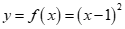 . Biểu thức nào sau đây là vi phân của hàm số đã cho?
 .
 .
 .
 .
 tại điểm x = 2, ứng với
 là:


 . Vi phân của hàm số là:


 . Vi phân của hàm số tại
 là:


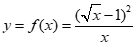 . Biểu thức 0,01f'(0,01) là số nào?
 .Vi phân của hàm số là:
 .
 .
 .
 .
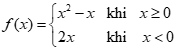 . Kết quả nào dưới đây đúng?
 .
 .
 .
 .
 . Vi phân của hàm số là:


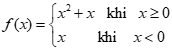 . Khẳng định nào dưới đây là sai?
 . Chọn kết quả đúng:
 .
 .
 .
 .
 . Vi phân của hàm số là:
 .
 .
 .
 .
 là :
 .
 .
 .
 .
 . Vi phân của hàm số là:
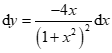 .
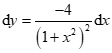 .
 .
 .
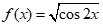 . Khi đó
 .
 .
 .
 .